
Plastic Processing Operator: Role, Skills, Duties, and Career Guide
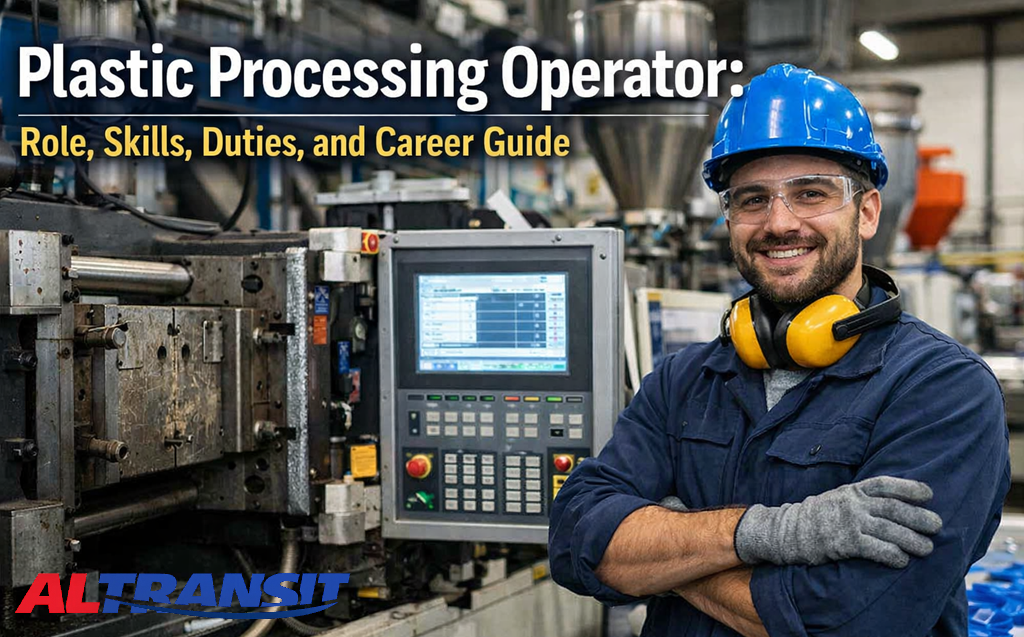
A plastic processing operator is a manufacturing professional who operates and monitors machines that convert raw plastic materials into finished products. These machines melt, shape, and cool plastic to produce items such as packaging containers, automotive parts, pipes, and electronic components.
The operator prepares machines, loads raw materials, controls temperature and pressure, inspects product quality, and performs basic maintenance. Their work ensures that plastic products are produced safely, efficiently, and according to quality standards.
Plastic processing operators play a vital role in modern manufacturing because plastic materials are widely used in industries such as packaging, healthcare, electronics, construction, and transportation.
Quick Overview of the Role
| Category | Details |
|---|---|
| Job Role | Operating machines that produce plastic products |
| Industry | Plastic manufacturing |
| Education | High school diploma or vocational training |
| Work Environment | Industrial factories |
| Career Growth | Operator → Technician → Supervisor |
What Is a Plastic Processing Operator?
A plastic processing operator works in a manufacturing facility where plastic materials are transformed into finished products using specialized machinery.
Factories use machines that heat plastic pellets or granules until they melt. The melted material is then shaped into specific forms using molds, dies, or pressure systems.
The operator supervises this process from start to finish. They ensure machines run correctly and that each product meets required specifications.
In simple terms, the plastic processing operator manages the machines that turn raw plastic into useful products.
Why Plastic Processing Operators Are Important
Plastic manufacturing supports many essential industries. Products made from plastic appear in nearly every part of daily life.
Plastic processing operators help factories:
- Maintain smooth production processes
- Ensure consistent product quality
- Reduce material waste
- Detect problems early in the manufacturing cycle
- Keep equipment operating safely
Without trained operators, production errors could increase and product quality could decline.
Key Responsibilities of a Plastic Processing Operator
Although responsibilities can vary between factories, the main duties remain similar across most plastic manufacturing environments.
Machine Setup and Preparation
Before production begins, operators prepare the machines and materials.
Common tasks include:
- Loading plastic pellets or resin into equipment
- Installing molds or dies used to shape products
- Setting machine parameters such as temperature and pressure
- Testing the machine before full production begins
Proper setup ensures accurate and efficient production.
Monitoring the Production Process
Once the machine starts running, the operator monitors the process carefully.
They observe factors such as:
- Heat levels
- Pressure settings
- Machine speed
- Material flow
Small adjustments may be needed to maintain consistent product quality.
Quality Inspection
Quality control is a major responsibility.
Operators inspect finished plastic products for problems such as:
- Surface defects
- Incorrect shape or size
- Weak material structure
If defects appear, they adjust machine settings or stop the machine to correct the issue.
Equipment Maintenance
Plastic processing operators also help maintain machinery.
Typical maintenance tasks include:
- Cleaning equipment after production
- Replacing worn parts
- Checking machine performance
- Reporting mechanical problems
Regular maintenance helps prevent unexpected equipment failures.
Common Plastic Processing Methods
Plastic products are created using several manufacturing techniques. Operators often specialize in one or more of these processes.
Injection Molding
Injection molding creates precise plastic parts by injecting melted plastic into molds.
Common products include:
- Bottle caps
- Electronic housings
- Automotive components
This method is widely used for detailed and high-volume production.
Extrusion
Extrusion produces long continuous plastic shapes.
Examples include:
- Plastic pipes
- Tubes
- Plastic sheets
In this process, melted plastic is pushed through a shaped opening and cooled to form a solid product.
Blow Molding
Blow molding produces hollow plastic items.
Typical products include:
- Water bottles
- Food containers
- Fuel tanks
The process expands heated plastic inside a mold using air pressure.
Thermoforming
Thermoforming shapes heated plastic sheets using molds.
Products often made through thermoforming include:
- Food trays
- Packaging containers
- Disposable cups
This method is common in packaging industries.
Skills Needed for a Plastic Processing Operator
A successful plastic processing operator combines technical knowledge with practical skills.
Technical Skills
Important technical abilities include:
- Understanding plastic materials and polymers
- Operating molding and extrusion machines
- Adjusting machine temperature and pressure
- Troubleshooting equipment problems
These skills help maintain efficient production.
Workplace Skills
Personal qualities also support success in this role.
Key traits include:
- Attention to detail
- Problem solving ability
- Communication with coworkers
- Focus during long production cycles
These qualities help operators maintain both safety and product quality.
Education and Training Requirements
Most plastic processing operator positions require a high school diploma or equivalent education.
However, technical training can improve job opportunities.
Common training paths include:
- Vocational training in manufacturing technology
- Apprenticeships in plastics processing
- Industrial training programs
- On-the-job training in manufacturing plants
Through experience, operators learn machine operation, safety procedures, and quality control techniques.
Work Environment
Plastic processing operators usually work in industrial factories or manufacturing plants.
Typical workplace conditions include:
- Large automated machines
- Warm temperatures from heated equipment
- Continuous production lines
- Loud manufacturing environments
Workers often stand for long periods and follow strict safety guidelines.
Protective equipment such as gloves, goggles, and ear protection is usually required.
Career Growth Opportunities
A career as a plastic processing operator offers several advancement opportunities within manufacturing.
Possible career paths include:
- Senior plastic processing operator
- Process technician
- Quality control inspector
- Production supervisor
- Manufacturing engineer with additional education
Experienced operators with specialized machine knowledge often move into higher technical roles.
Industries That Hire Plastic Processing Operators
Plastic processing operators are needed in many sectors because plastic materials are widely used.
Common industries include:
- Packaging manufacturing
- Automotive production
- Medical device manufacturing
- Consumer goods production
- Construction materials manufacturing
This wide demand provides stable employment opportunities.
Frequently Asked Questions
What does a plastic processing operator do?
A plastic processing operator runs machines that melt and shape plastic materials into finished products in manufacturing plants.
What machines do plastic processing operators use?
They commonly use injection molding machines, extrusion lines, blow molding machines, and thermoforming equipment.
Do you need technical training for this job?
Most jobs require a high school diploma, but vocational training improves job prospects and technical skills.
Is plastic processing operator a skilled job?
Yes. The job requires machine knowledge, attention to detail, and the ability to monitor production processes carefully.
Where do plastic processing operators work?
They usually work in plastic manufacturing factories producing packaging, automotive parts, medical products, and consumer goods.
Conclusion
The role of a plastic processing operator is essential in modern manufacturing. These professionals manage the machines that transform raw plastic materials into products used in everyday life.
From packaging and electronics to medical equipment and automotive components, many industries depend on plastic manufacturing. Skilled operators ensure that these products are produced safely, efficiently, and with consistent quality.
As manufacturing technology continues to evolve, the demand for knowledgeable plastic processing operators will remain strong. Their expertise connects raw materials, advanced machinery, and the products people rely on every day.