
Eagles Rookie Trade Attempt: Full Draft Story and Strategy Guide
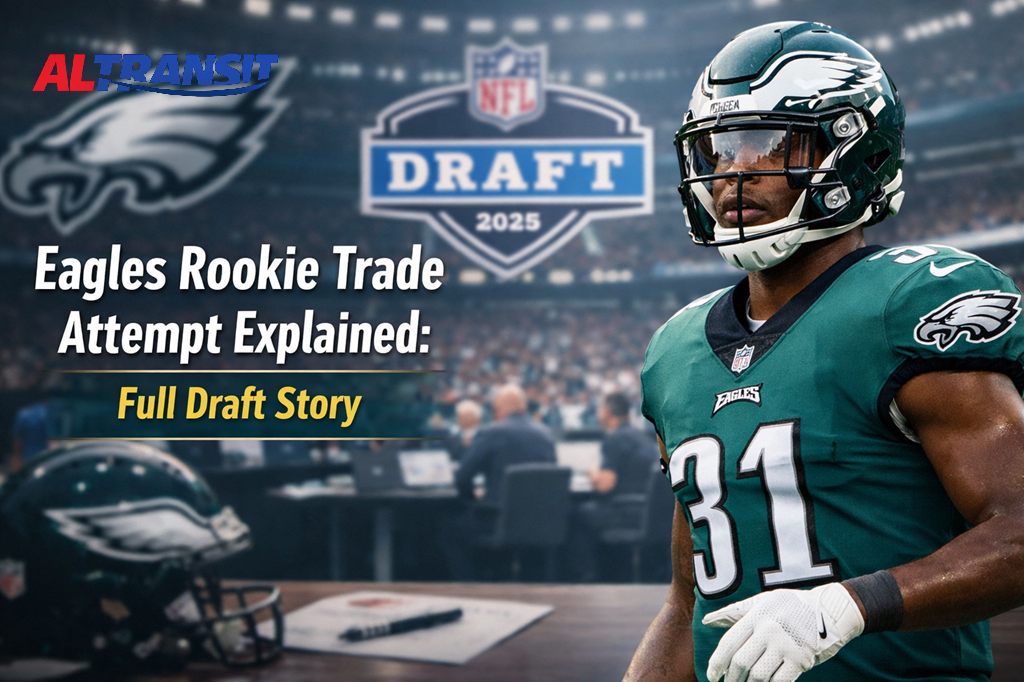
The 2025 NFL Draft included an important moment when the Philadelphia Eagles explored several trade options to secure a defensive rookie they strongly valued. The front office considered moving higher in the first round, but larger trades were not completed because the cost in draft picks was too high.
Instead of forcing a major deal, the Eagles stayed patient and followed the draft closely. When their targeted rookie remained available late in the first round, the team completed a small trade to move from pick No. 32 to pick No. 31. This move allowed the Eagles to select linebacker Jihaad Campbell while protecting future draft assets.
The Eagles rookie trade attempt refers to the team’s effort to move higher in the first round of the 2025 NFL Draft in order to select linebacker Jihaad Campbell.
In Simple Terms
- The Eagles identified a rookie defender as a priority
- The team explored trades to move higher in the draft
- Larger deals did not happen because the price was too high
- A small trade secured the selection
- The Eagles selected linebacker Jihaad Campbell
This draft story shows how NFL teams plan carefully, adjust during the draft, and balance risk with long term development.
How the Draft Strategy Developed
Preparation for the draft started months before the event. Coaches and scouts reviewed player performances and built a detailed draft board. The Eagles focused on defensive prospects who could improve speed and coverage across the field.
As evaluations continued, one linebacker stood out as a strong fit. The Eagles believed he could help both immediately and in the future.
Because the team held the final pick in the first round, there was a real chance another team might select the player earlier. Therefore, the front office prepared several trade options in advance.
This preparation made it easier to react during draft night.
The Eagles have a history of exploring draft trades to improve the roster. Team leadership often studies several draft scenarios before the draft begins. Because of this approach, trade discussions are a normal part of the Eagles planning process.
Why the Eagles Targeted Jihaad Campbell
Jihaad Campbell matched the Eagles defensive system and long term plans. The coaching staff valued linebackers who could move quickly and adjust to different situations.
Modern NFL defenses require players who can handle both running plays and passing plays. Campbell showed these abilities during his college career.
Key Strengths
Campbell offered several valuable qualities:
- Strong tackling ability
- Good awareness on the field
- Quick reaction speed
- Ability to cover receivers
- Versatile defensive skills
These traits made him a natural fit for the Eagles defense.
Attempts to Move Higher in the First Round
Early Trade Discussions
Before making their final selection, the Eagles explored several trade possibilities that would move them higher in the first round.
These possible deals required valuable draft picks. After reviewing the costs, the Eagles decided not to complete a major trade.
The front office believed that protecting future draft picks was important for long term success.
Instead of forcing a deal, the team waited to see how the draft would develop.
Draft Night Decisions
Trade discussions continued during the draft itself. The Eagles remained in contact with other teams and stayed ready to act if needed.
As the draft progressed, the targeted rookie remained available longer than expected. Because of this, the team no longer needed a large trade.
Patience became the best option.
The Trade That Secured the Rookie
Late in the first round, the Eagles completed a small trade that moved them up one position in the draft order.
Trade Summary
| Eagles Received | Other Team Received |
|---|---|
| Pick No. 31 | Pick No. 32 |
| — | Later round draft pick |
This small move guaranteed the selection while protecting most future draft assets.
After completing the trade, the Eagles selected linebacker Jihaad Campbell.
What the Trade Attempt Shows About Team Strategy
The draft trade effort reflects the Eagles approach to building a competitive roster.
The organization prepares several draft plans instead of relying on one outcome. This flexibility allows the team to adjust during the draft.
Typical Draft Planning Steps
The Eagles often follow a structured process:
- Identify team needs
- Evaluate rookie prospects
- Rank players on the draft board
- Prepare trade scenarios
- Monitor draft selections
- Make final decisions
This process allows careful decision making while still allowing aggressive moves when needed.
Why a Larger Trade Did Not Happen
Moving higher in the first round often requires giving up valuable draft picks. The Eagles decided that the cost of a large trade was too high.
Main Reasons
- High cost in draft picks
- Need to protect future selections
- Uncertain draft results
- Long term roster planning
Because of these concerns, the Eagles avoided a major trade.
Impact on the Eagles Roster
The rookie trade attempt influenced the team in several ways.
Defensive Improvement
The rookie selection added young talent to the defense. Young players help teams remain competitive over time.
Future Flexibility
Because the Eagles avoided a major trade, the team kept valuable future draft picks. This flexibility supports future roster planning.
Confidence in Scouting
The successful selection showed confidence in the scouting process. The front office trusted its evaluations and stayed patient.
Timeline of Events
| Stage | Event |
|---|---|
| Pre Draft | Target rookie identified |
| Draft Planning | Trade options prepared |
| Early Draft | Larger trade discussions |
| Mid Draft | Trade offers rejected |
| Late Round One | Small trade completed |
| Final Step | Jihaad Campbell selected |
Final Thoughts
The Eagles rookie trade attempt shows how careful planning shapes modern NFL drafts.
The Philadelphia Eagles explored several trade possibilities because they believed a specific rookie could strengthen the defense. When the cost became too high, the team stayed patient and trusted the draft process.
Eventually, a small move allowed the Eagles to secure the same player without sacrificing important draft assets.
This draft story shows how successful NFL teams combine preparation, discipline, and timing when building strong rosters for the future.
FAQs
What was the Eagles rookie trade attempt?
The Eagles rookie trade attempt refers to the Philadelphia Eagles’ effort during the 2025 NFL Draft to move higher in the first round to select linebacker Jihaad Campbell. The team explored larger trades but instead completed a small move from pick No. 32 to pick No. 31 to secure the player.
Why did the Eagles try to trade up in the draft?
The Eagles tried to trade up because they believed Jihaad Campbell was a strong fit for their defense. Moving higher in the draft would have guaranteed the selection, but the team avoided expensive deals and waited for a better opportunity.
Did the Eagles complete the rookie trade?
Yes, the Eagles completed a small trade late in the first round. The team moved from pick No. 32 to pick No. 31, which allowed them to select linebacker Jihaad Campbell while keeping future draft picks.
Why is the Eagles rookie trade attempt important?
The Eagles rookie trade attempt shows how the team balances aggressive planning with careful decision making. The Eagles secured their targeted rookie without sacrificing important future draft assets.