
Securing Energy Flows: Prysmian Group Oil and Gas Cable Solutions for Offshore and Onshore Fields
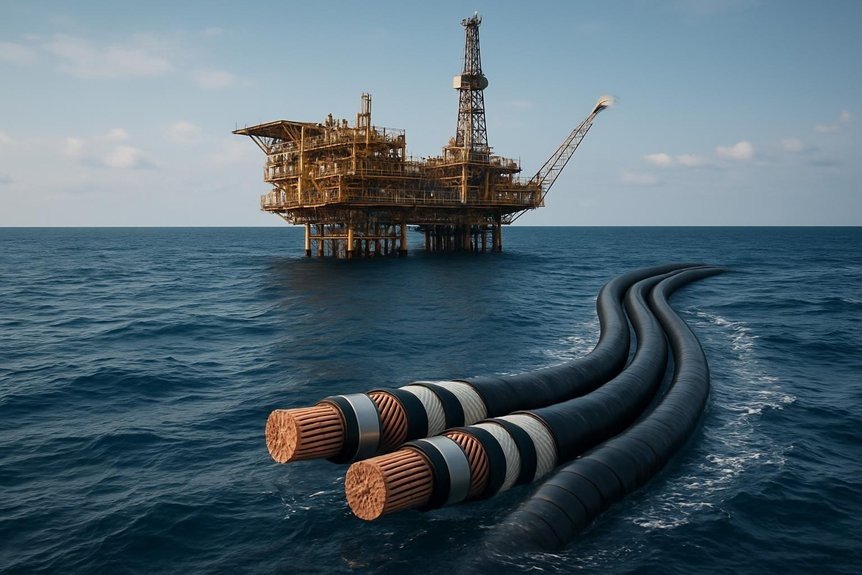
Prysmian Group engineers cable systems for oil and gas environments where electrical failure carries serious consequences. Offshore installations expose cables to crushing hydrostatic pressure, saltwater corrosion, and dynamic mechanical loads. Onshore fields present their own demands for abrasion, hydrocarbon exposure, and thermal cycling. Meeting these conditions requires more than standard industrial cable design. What specific material choices, structural configurations, and qualification standards allow Prysmian’s products to perform reliably across these environments is worth examining closely.
The Cable Challenges Unique to Oil and Gas Environments
The oil and gas industry presents cable systems with operating conditions that are among the most demanding encountered in any industrial sector. Subsea installations expose cables to extreme hydrostatic pressure, corrosive saline environments, and dynamic mechanical loading from wave action and vessel movement.
Onshore applications introduce abrasion risks, hydrocarbon exposure, and wide thermal variation across desert and arctic deployment zones. Cable durability requirements in these environments exceed standard industrial specifications, necessitating materials and construction methods engineered for long-term structural integrity.
Temperature resistance needs span from cryogenic conditions in liquefied natural gas facilities to elevated heat levels near processing equipment and wellheads. Electrical performance must remain consistent throughout these stresses, as cable failure in oil and gas infrastructure carries consequences for operational continuity, personnel safety, and environmental protection.
What Makes Prysmian’s Offshore Cables Resistant to Saltwater and Pressure?
Prysmian’s offshore cables achieve saltwater and pressure resistance through a combination of material selection, layered construction, and protective sheathing technologies engineered specifically for subsea deployment.
Saltwater corrosion resistance is addressed through the application of lead alloy or polymer-based sheaths that prevent electrolytic degradation across the cable’s service life. Metallic armor layers, typically comprising galvanized or stainless steel wires, provide structural reinforcement against both mechanical stress and hydrostatic loading.
High pressure durability is further guaranteed through water-blocking compounds integrated between insulation and sheath layers, preventing moisture ingress under extreme depth conditions. Cross-linked polyethylene insulation maintains dielectric integrity despite sustained exposure to pressure gradients.
Each construction element is selected and tested against IEC and industry-specific standards governing subsea cable performance thresholds.
Prysmian’s Onshore Cable Lines Built for Heat, Flex, and Stress
Onshore oil and gas environments impose thermal stress, continuous mechanical flexing, and sustained load-bearing demands that require cable systems engineered with equal rigor to their subsea counterparts. Prysmian’s onshore product lines address these conditions through compound-specific insulation materials, reinforced armor configurations, and sheath formulations engineered to resist hydrocarbon exposure, abrasion, and elevated ambient temperatures.
Thermal management is achieved through conductor geometry optimization and insulation grades selected to maintain dielectric integrity across extended operational cycles. Cable durability is further reinforced through multi-layer constructions that distribute mechanical stress and prevent fatigue-induced failures in high-flex routing scenarios.
These design parameters apply consistently across wellhead connections, pump motor feeds, and surface processing installations, ensuring reliable power transmission under the demanding physical conditions characteristic of active onshore field operations.
Prysmian Certifications That Meet IECEx, ATEX, and API Standards
Certification compliance in explosive atmospheres and hazardous-area installations requires adherence to internationally recognized standards that govern equipment safety, electrical performance, and installation suitability. Prysmian Group maintains Ex proof certification compliance across IECEx, ATEX, and API frameworks, ensuring cables deployed in Zone 0, Zone 1, and Zone 2 classifications meet verified ignition protection requirements.
IECEx certification validates conformity with IEC 60079 series specifications, while ATEX directives satisfy European regulatory mandates for potentially explosive environments. API standards address mechanical and chemical performance benchmarks relevant to upstream and downstream oil and gas operations.
These global cable quality standards provide operators with documented assurance that installed cable systems perform reliably under operational stress, temperature variation, and chemical exposure inherent to both offshore platforms and onshore processing facilities.
Key Prysmian Product Lines for Oil and Gas Applications
Designed to address the operational demands of upstream, midstream, and downstream environments, Prysmian Group’s oil and gas cable solutions portfolio encompasses several specialized product lines distinguished by construction, application scope, and environmental rating.
Core offerings include instrumentation cables, power cables, fire-resistant cables, and subsea umbilicals. Cable material selection follows stringent criteria, prioritizing resistance to hydrocarbons, mechanical stress, and thermal cycling.
Engineering design innovations are evident in armoring configurations, insulation compounds, and sheath formulations tailored to specific installation conditions, whether buried, submerged, or exposed to explosive atmospheres.
Product lines such as the FP Plus fire-resistant series and the Belden-integrated instrumentation range reflect systematic development aligned with IECEx and ATEX requirements. Each line addresses defined performance thresholds, reducing field failure risk across critical energy infrastructure.
Prysmian Cable Roles in Subsea and Topside Installations
Subsea and topside installations present fundamentally different operational stressors, requiring Prysmian to engineer cable systems that address hydrostatic pressure, corrosive seawater ingress, dynamic mechanical loading, and elevated thermal gradients within a single deployment framework.
Cable installation techniques vary considerably between environments: subsea configurations demand armored, pressure-rated constructions deployed via controlled lay vessels, while topside installations prioritize flame-retardant, mechanically protected routing through cable trays and conduit systems.
System integration challenges emerge at the interface between these environments, where connection points must maintain electrical continuity, mechanical integrity, and environmental sealing simultaneously.
Prysmian addresses these challenges through purpose-engineered connection assemblies and rigorous qualification testing aligned with DNV, IEC, and API standards, ensuring consistent performance across the full installation spectrum from seabed infrastructure to platform-level power distribution networks.
Global Oil and Gas Projects Where Prysmian Has Delivered
The engineering frameworks and qualification standards governing Prysmian’s subsea and topside cable systems have been validated across a substantial portfolio of deployed projects spanning major hydrocarbon basins worldwide. Installations recorded across the North Sea, Gulf of Mexico, West Africa, and Southeast Asian offshore developments reflect consistent project portfolio growth, with each deployment reinforcing documented performance data across varied environmental and operational conditions.
Prysmian’s international market presence extends across both deepwater floating production systems and fixed-platform shallow-water installations, encompassing umbilical-integrated power cables, dynamic risers, and static seabed configurations. Contracts executed for operators including major integrated energy companies and national oil corporations confirm repeated qualification cycles across differing regulatory jurisdictions.
This breadth of field-proven deployment constitutes measurable commercial and technical evidence of Prysmian’s sustained capability within the global upstream oil and gas sector.
