
Why Hand Painted Sacred Icons Are Making a Comeback in Modern Home Decor
There is something quietly surprising about walking into a contemporary flat and finding a hand painted sacred icon hanging above the sofa. Not a framed print from a high street chain, not a geometric abstract, but a genuine, gold-leafed, egg-tempera icon staring back at you with the calm authority of something that has outlasted every interior trend by about fifteen centuries.
More homeowners are choosing hand painted sacred icons as meaningful statement pieces for modern interiors, blending centuries-old craftsmanship with contemporary design. And once you start noticing this, you see it everywhere. These are not impulsive purchases. People are seeking them out deliberately, researching them, saving up for them. Something is clearly going on.
A Quiet Revolution in How We Dress Our Walls
For a long time, decorating a home meant choosing between the tasteful and the personal. Mass-produced art filled the gap efficiently enough, but it never quite filled the room. There has been a gradual, collective waking-up to that emptiness, and the response has been a turn toward objects that carry genuine weight, whether that weight comes from the hand that made them, the story behind them, or the tradition they represent.
Sacred art sits right at the intersection of all three. An icon is not just something to look at. It arrives with centuries of devotion baked into its very form, and that is not nothing when you are trying to make a house feel like a home.
What Makes an Icon an Icon
Not everything labelled an icon actually is one, and the distinction matters. A genuine hand painted sacred icon is produced using traditional techniques that have changed remarkably little over a thousand years. The support is typically a wood panel, prepared with layers of gesso. The paint is egg tempera, a medium that dries with a luminous, almost crystalline quality that no modern acrylic can replicate. Gold leaf is applied to the background, giving the image its signature sense of otherworldly light.
The subject matter follows strict compositional rules, or canons, inherited from Byzantine and Eastern Orthodox traditions. These are not artistic choices left to personal taste. They are the accumulated visual theology of the Church, refined over generations. That discipline is part of what gives icons their peculiar power. They do not look like anything else because they were never trying to.
The Craft Behind the Canvas
From Monastery Workshop to Modern Studio
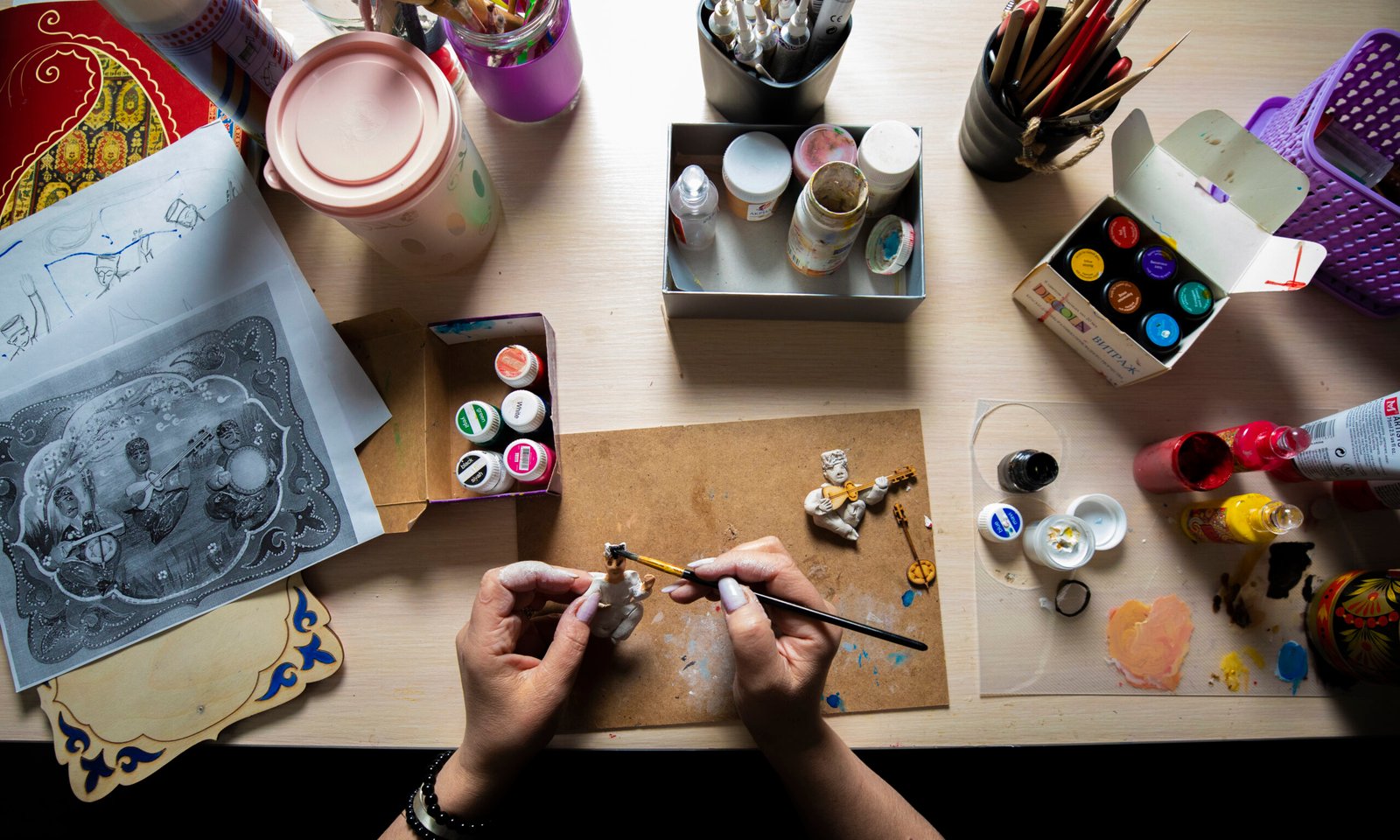
An icon does not get made quickly. From preparing the panel to applying the final varnish, a single piece might take weeks. Skilled iconographers trained in traditional methods are producing remarkable work in small studios, often alongside or as part of religious communities where the practice is understood as a form of prayer in itself.
This is not a romantic exaggeration. Many iconographers will fast and pray before beginning work. The discipline is part of the process, and buyers are increasingly aware of it. When you know that the object on your wall was made slowly, intentionally, and with a kind of reverence that has no equivalent in a printing factory, it changes how you relate to it.
Compare that to a mass-produced religious print, which might carry the right image but none of the presence. There is a difference between a reproduction and an original, and with icons, that difference is not merely aesthetic.
Sacred Art in Secular Spaces
Here is the question that tends to hover around all of this: is it appropriate to hang a devotional object in a home that is not, strictly speaking, a devotional space? It is worth thinking about, though I suspect the answer is less fraught than people fear.
Icons have always served a dual purpose. In churches and monasteries, they are objects of prayer and veneration. In private homes, they have historically been both. But beauty has its own integrity, and there is a long tradition within Catholic and Christian thought that holds the beautiful and the sacred to be close companions. Hanging an icon in a living room does not desacralise it. If anything, it brings a particular quality of attention into a space that could use it.
Choosing the Right Icon for Your Home
Style, Subject and Setting
If you are new to this, the range of options can feel a little overwhelming, so it helps to start with the subject. The Madonna and Child is the most universally recognisable and tends to work well in almost any domestic setting, with its warmth and intimacy. Christ Pantocrator, the iconic image of Christ as Ruler of All, is more imposing and suits a hallway or study where you want something with a bit of gravitas. Guardian saint icons are increasingly popular and offer a more personal dimension, particularly if you have a name day connection or a particular devotion.
Beyond subject, think about scale and light. Gold leaf does extraordinary things in natural light, catching it at different angles throughout the day in a way that a flat print simply cannot. A smaller icon on a well-lit wall will often make more of an impression than a large one in a dim corner. Placement is worth taking seriously.
A few practical considerations worth keeping in mind:
- Avoid hanging icons in kitchens or bathrooms where humidity fluctuates, as this can damage the panel over time
- Natural light is ideal, but direct sunlight will fade the tempera and damage the gilding
- A simple shelf or bracket below the icon, holding a candle or a small flower, gives the piece its proper context without making the space feel like a shrine
Why Now
It would be easy to frame this purely as an aesthetic trend, but that would be selling it short. The renewed interest in hand painted sacred icons fits into something larger happening in culture right now. There is a weariness with disposable objects and fast interiors. There is a growing appetite for things made slowly, made well, and made to last.
The post-pandemic reassessment of domestic life played a role too. People spent an enormous amount of time looking at their walls, and a lot of them did not love what they saw. The result has been a quiet but real movement toward interiors that feel intentional, layered, and personally meaningful. Sacred art, with its combination of beauty, history, and human craft, answers that need rather well.
There is also something in the current cultural mood that is more open to the spiritual than it has been in a generation. Not necessarily institutional religion, but a genuine curiosity about transcendence, meaning, and the kind of beauty that asks something of you.
Where Tradition Finds a Home in the Modern World
Hand painted sacred icons are not a nostalgic curiosity dragged out of a church basement. They are a genuinely contemporary choice, made by people who want their homes to reflect something more than current trends. In a world that produces more images than any previous era and cares less about most of them, there is something quietly radical about choosing an object made with this much intention.
The tradition is old. The craft is demanding. The presence these objects bring into a room is, by most accounts, rather difficult to replicate by other means. That is why hand painted sacred icons are finding their way back into modern homes, and why, in all likelihood, they are not going anywhere.
