
How AI and Automation Are Transforming Quality Assurance in Software Development
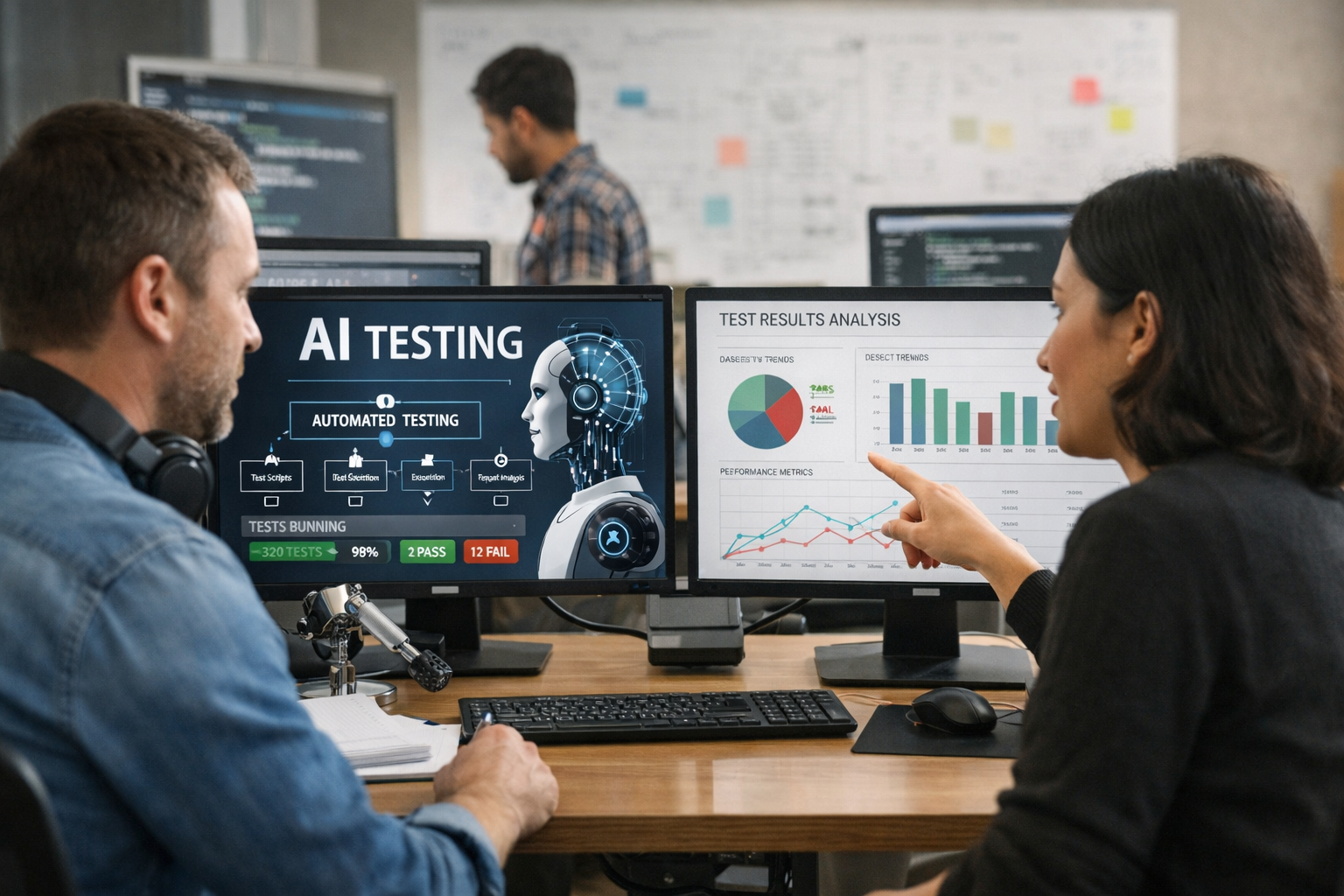
Quality Assurance has always been a critical component of software development. In the early days of computing, testing was largely manual, time-consuming, and dependent on repetitive human effort. As applications grew more complex and release cycles became shorter, traditional testing approaches struggled to keep up. Today, Artificial Intelligence and automation are transforming Quality Assurance into a smarter, faster, and more scalable discipline.
Modern QA is no longer limited to finding defects at the end of development. It is integrated throughout the software lifecycle, supported by intelligent systems that analyze patterns, predict failures, and continuously validate functionality. AI and automation are redefining how teams build, test, and release software in Agile and DevOps environments.
The Shift from Manual Testing to Intelligent Automation
Manual testing plays an important role in exploratory and usability testing, but it becomes inefficient when applied to repetitive tasks such as regression testing or cross-platform validation. As applications expand across web, mobile, cloud, and API layers, the volume of test cases increases dramatically.
Automation addresses this challenge by executing predefined test scripts quickly and consistently. However, traditional automation frameworks still require significant scripting effort and maintenance. When user interfaces change or workflows are updated, scripts often break, resulting in additional overhead.
AI-driven automation takes this a step further. Instead of relying purely on rigid scripts, intelligent systems can understand application behavior, adapt to changes, and reduce maintenance complexity. This evolution marks the transition from rule-based automation to adaptive and learning-based testing systems.
Machine Learning in Predictive Defect Detection
One of the most powerful contributions of AI to QA is predictive analytics. Machine learning models analyze historical defect data, code changes, and testing patterns to identify high-risk areas within an application.
For example, if a specific module frequently produces defects after updates, AI can prioritize testing for that module during future releases. This risk-based testing approach allows teams to allocate resources efficiently and detect critical issues earlier in the development cycle.
Predictive defect detection reduces guesswork and supports data-driven decision-making. Instead of running every test case blindly, teams can focus on scenarios most likely to fail, improving both speed and reliability.
Self-Healing Test Scripts and Reduced Maintenance
One of the major pain points in traditional automation is script maintenance. Minor interface changes, such as a renamed button or updated layout, can cause automated tests to fail even when the core functionality remains intact.
AI-powered tools introduce self-healing capabilities. These systems use pattern recognition and contextual understanding to identify elements even when attributes change. When a UI component is modified, the testing system adapts without requiring manual script updates.
This capability significantly reduces maintenance effort, especially in dynamic applications with frequent releases. As a result, QA teams can focus on improving coverage and designing better test scenarios instead of constantly fixing broken scripts.
Faster Regression Cycles in Agile and DevOps
Agile and DevOps methodologies emphasize rapid iteration and continuous delivery. In such environments, regression testing must be executed frequently to ensure new features do not break existing functionality.
AI-enhanced automation accelerates regression cycles by executing thousands of tests in parallel across different environments. Intelligent prioritization further optimizes the process by running critical tests first.
Continuous integration pipelines benefit from this automation. Whenever new code is committed, automated test suites validate functionality instantly. Developers receive quick feedback, enabling faster bug fixes and smoother releases.
By integrating AI-driven testing into CI and CD workflows, organizations maintain quality while preserving development velocity.
Improving Test Coverage and Accuracy
Comprehensive test coverage is essential for ensuring application reliability. Manual testing alone cannot realistically cover all possible user scenarios, especially in complex enterprise systems.
AI systems can generate additional test cases by analyzing user behavior patterns and application workflows. They identify edge cases that human testers might overlook and simulate real-world usage conditions.
Automation also reduces human error. While manual testers may occasionally skip steps or misinterpret results, automated systems execute tasks consistently. AI further enhances accuracy by validating outcomes using data-driven rules and anomaly detection.
Together, these capabilities improve both depth and breadth of testing coverage.
Democratizing Automation with Low-Code and No-Code Approaches
Another significant shift in modern QA is the move toward low-code and no-code automation platforms. Traditionally, automation required programming knowledge and familiarity with scripting frameworks. This limited automation efforts to technical specialists.
AI-powered tools now enable teams to create automated tests using natural language or simplified workflows. This democratizes test automation and allows business analysts, product managers, and non-technical stakeholders to participate in quality assurance.
For instance, platforms like testRigor, as an AI-powered testing tool, demonstrate how AI can simplify end-to-end test creation without heavy coding. By enabling users to write tests in plain language and automatically adapt to UI changes, such tools align with the broader trend of intelligent, accessible automation.
This approach bridges the gap between development and testing teams, fostering collaboration and shared responsibility for quality.
Enhancing Collaboration Across Teams
AI and automation also promote better communication within cross-functional teams. Real-time dashboards and analytics provide clear insights into test results, defect trends, and performance metrics.
Instead of relying solely on static reports, teams can monitor quality metrics continuously. Developers gain visibility into failing tests immediately after deployment. Product owners can review quality indicators before approving releases.
This transparency supports a culture of accountability and continuous improvement, which is central to modern software practices.
Reducing Costs and Accelerating Time to Market
While implementing automation requires initial investment, the long-term benefits often outweigh the costs. Automated testing reduces repetitive manual effort, shortens release cycles, and minimizes production defects.
AI further amplifies these advantages by optimizing resource allocation and minimizing script maintenance. Faster regression cycles mean quicker feature releases. Early defect detection prevents costly rework and post-release failures.
In competitive markets, the ability to deliver high-quality software rapidly becomes a strategic advantage. AI-powered QA solutions help organizations achieve this balance between speed and reliability.
Challenges and Considerations
Despite its benefits, AI-driven QA is not without challenges. Machine learning models require quality data to produce reliable predictions. Poorly labeled defect histories or inconsistent testing records can limit effectiveness.
Additionally, over-reliance on automation may reduce exploratory testing efforts, which remain important for uncovering unexpected user behaviors. Organizations must strike a balance between intelligent automation and human insight.
Successful adoption also requires proper training, cultural alignment, and integration with existing development workflows.
The Future of Quality Assurance
The future of QA is increasingly intelligent and automated. As AI technologies mature, we can expect even more advanced capabilities such as autonomous test generation, real-time production monitoring, and predictive performance analysis.
Testing will become less about reactive defect detection and more about proactive quality engineering. AI will not replace human testers, but it will augment their capabilities, enabling them to focus on strategic analysis and creative problem-solving.
Organizations that embrace AI and automation in Quality Assurance position themselves for sustainable growth in a rapidly evolving technological landscape.
Conclusion
Artificial Intelligence and automation are reshaping Quality Assurance in profound ways. From predictive defect detection and self-healing scripts to faster regression cycles and improved test coverage, intelligent systems are transforming how teams ensure software quality.
In Agile and DevOps environments, where speed and reliability must coexist, AI-driven testing solutions provide the foundation for continuous improvement. By combining automation with machine learning and collaborative practices, organizations can deliver robust software products while reducing costs and accelerating time to market.
As technology continues to advance, embracing AI in QA testing is no longer optional. It is a strategic necessity for building scalable, efficient, and future-ready software systems.
