
Tesla China Battery Project Renewable Energy Explained
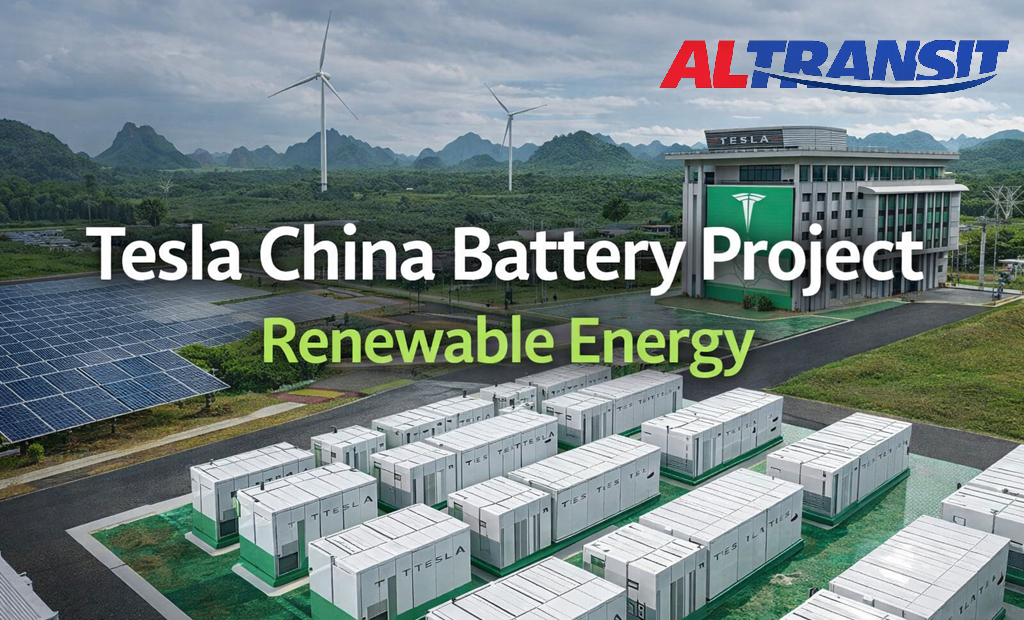
Tesla is developing a large-scale battery storage project in China to support renewable energy integration. The Tesla China Battery Project Renewable Energy centers on a Megapack factory in Shanghai that will produce up to 10,000 utility-scale battery systems annually starting in 2025. These systems store solar and wind electricity and release it during peak demand, helping stabilize the power grid and reduce fossil fuel reliance.
This project is not symbolic. It directly addresses the technical limits that slow renewable adoption and turns clean power into reliable infrastructure.
Why Battery Storage Matters for Renewable Energy
China leads the world in solar and wind installation. However, renewable electricity does not always arrive when people need it.
Solar generation peaks during the day.
Wind power often peaks at night.
Electricity demand rises in the evening.
Without storage, excess clean energy is wasted, and fossil fuel plants remain active. Grid scale batteries solve this problem by shifting renewable electricity across time.
Battery storage allows power systems to:
- Capture surplus renewable energy
- Deliver power during peak demand
- Reduce grid congestion
- Improve frequency and voltage stability
This is the core challenge the Tesla China Battery Project Renewable Energy is designed to solve.
Inside the Shanghai Megapack Factory
Tesla built a dedicated Megapack manufacturing facility in Shanghai that focuses entirely on grid level energy storage rather than vehicles.
Production capacity and scale
The factory is designed to:
- Produce 10,000 Megapack units per year
- Deliver 3.9 megawatt hours of storage per unit
- Support large grid installations through modular deployment
At full output, the facility can support storage capacity large enough to stabilize multiple regional power networks.
Operational timeline
The factory moved from construction to production on an accelerated schedule. Tesla produced its first Megapack units in Q1 2025, with output expanding throughout the year. This pace reflects both Tesla’s manufacturing experience in Shanghai and China’s urgent need for grid stability.
What Makes Megapack a Grid-Level Solution
Megapack systems are purpose built for continuous grid operation.
Each unit integrates:
- High density lithium based battery cells
- Advanced thermal management
- Power electronics for grid regulation
- Software that reacts instantly to grid conditions
Together, these systems act as smart regulators, absorbing excess electricity and releasing it precisely when the grid requires support.
The $557 Million Grid Storage Project in Shanghai
In June 2025, Tesla signed a $557 million agreement to construct its first grid side energy storage station in Shanghai.
This project places Megapack systems directly into China’s electricity infrastructure.
The storage station helps:
- Balance renewable energy surges
- Reduce blackout risk
- Lower reliance on coal peaker plants
- Improve grid efficiency during peak demand
This installation shows how battery storage can function as core grid infrastructure rather than emergency backup.
Strategic Location in Lingang District
The Megapack factory is located in Shanghai’s Lingang district, a zone known for advanced manufacturing and clean energy development.
Lingang offers:
- Access to major export ports
- A mature industrial ecosystem
- Strong regulatory support for new energy projects
This environment previously supported Tesla’s vehicle production success, making it a proven base for large scale operations.
Local Supply Chain Integration
While Tesla operates the factory independently, it integrates with China’s battery supply chain.
Some components are expected to be sourced from CATL, the world’s largest battery producer.
This localized approach:
- Reduces logistics complexity
- Accelerates production scaling
- Aligns with China’s industrial priorities
As a result, the project gains resilience and efficiency.
Enabling China’s Solar and Wind Expansion
China’s renewable growth increasingly depends on storage capacity.
Battery systems make it possible to:
- Shift midday solar power to evening use
- Capture overnight wind generation
- Connect more renewable projects without grid overload
As storage expands, renewable energy becomes more predictable, more valuable, and easier to integrate nationwide.
Alignment With National Climate Goals
China plans to peak carbon emissions before 2030 and reach carbon neutrality by 2060. These targets require grid modernization, not just new power plants.
Tesla’s energy storage project supports this transition by:
- Improving renewable utilization rates
- Reducing fossil fuel backup needs
- Increasing power system efficiency
The technology directly enables cleaner electricity delivery at scale.
Tesla’s Energy Business Reaches a New Phase
Tesla has deployed Megapack systems in the United States, Australia, and the United Kingdom. China represents the largest and most complex grid environment the company has entered.
Success here shows that:
- Grid scale battery storage is commercially viable
- Renewable heavy grids can remain stable
- Energy storage is essential utility infrastructure
For Tesla, this confirms that energy storage is now a central business pillar, not a side project.
Global Impact Beyond China
China’s energy system influences global standards. Solutions proven here often shape future projects worldwide.
The Shanghai Megapack operation demonstrates that:
- Renewable reliability is achievable at national scale
- Batteries can replace fossil fuel grid balancing
- Clean energy systems can grow without instability
Other countries facing similar grid challenges are watching closely.
Read More | Irish Whiskey Industry Tariffs
A Clear Path Forward
The Tesla China Battery Project Renewable Energy initiative is built on manufacturing capacity, real deployment, and measurable grid impact.
By pairing renewable generation with grid scale storage, the project transforms clean energy from intermittent supply into dependable power.
- For China, it strengthens grid resilience.
- For Tesla, it confirms global energy leadership.
- For the world, it offers a proven model for the future of renewable electricity.
This is how clean energy moves from ambition to execution.