
Costco Rival Launches Megastore With Broader Food Selection
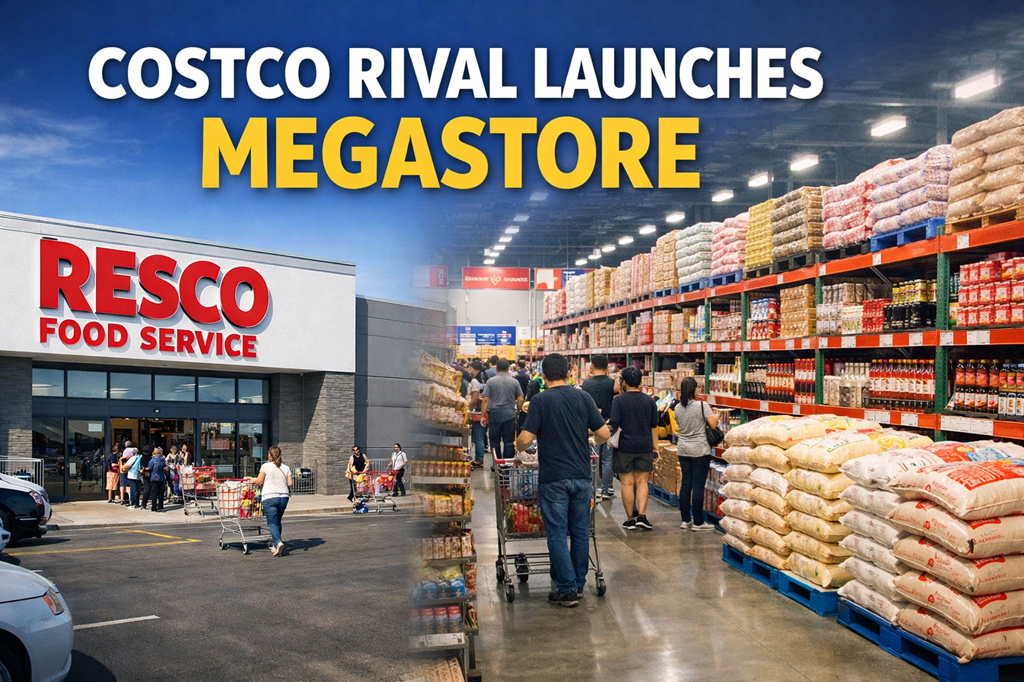
Costco Rival Launches Megastore is not a vague retail headline or speculative trend piece. It refers to a real shift happening inside the warehouse club industry, driven by a fast growing challenger that is rethinking scale, access, and cultural relevance. That challenger is Resco Food Service, and its City of Industry megastore represents a meaningful evolution of the Costco style model rather than a simple imitation.
This article explains exactly what has launched, why it matters now, how it differs from Costco, and what it signals for the future of warehouse retail in the United States.
What Happened When the Costco Rival Launched Its Megastore
In early 2024, Resco Food Service opened a warehouse-style megastore in the City of Industry, a major industrial hub east of downtown Los Angeles. The store occupies a repurposed commercial building and operates as a membership optional megastore, a critical distinction that immediately separates it from Costco’s mandatory membership model.
The launch did not rely on national advertising. Instead, it gained momentum organically through word of mouth, local communities, and social media discovery. Within months, shoppers began referring to it as an “Asian Costco,” not as a marketing slogan but as a reflection of how closely the experience mirrors a warehouse club while serving a very different purpose.
Why This Megastore Is Being Compared to Costco
The comparison exists because the fundamentals are familiar.
Warehouse scale and bulk economics
Resco’s megastore is designed around wide aisles, pallet-stacked inventory, and bulk pricing that serves both everyday households and commercial buyers. Many products are sold in quantities similar to Costco, including large rice bags, multi pack snacks, frozen foods, and foodservice size condiments.
Destination shopping behavior
Like Costco, the Resco megastore encourages browsing. Shoppers often come in with a short list and leave with unexpected finds. This discovery driven experience is one of the core reasons Costco has remained dominant for decades.
Price discipline over presentation
The store is no frills by design. Concrete floors, industrial shelving, and minimal signage keep overhead low and pricing competitive. This mirrors Costco’s long held belief that value matters more than aesthetics.
Where the Costco Rival’s Megastore Is Fundamentally Different
Although the format feels familiar, the strategy is not.
Membership is optional, not required
Costco requires shoppers to pay an annual fee simply to enter. Resco removes that barrier entirely.
- Anyone can shop without a membership
- An optional $20 annual membership unlocks additional discounts
- No commitment is required for first time or occasional shoppers
This structure attracts shoppers who feel fatigued by subscriptions while still rewarding frequent buyers.
Product focus is culturally specialized
Costco limits each warehouse to roughly 4,000 SKUs to protect pricing power and quality control. Resco carries over 5,000 items, with a deep emphasis on Asian groceries and imported foods.
Common categories include:
- Multiple regional noodle varieties
- Specialty sauces and fermented products
- Imported snacks and beverages
- Fresh produce rarely found in mainstream chains
- Bulk proteins used by restaurants
This specialization allows Resco to serve communities Costco only partially reaches.
Business and household shoppers share the same floor
Resco’s roots are in foodservice supply. Restaurant owners shop alongside families, which shapes inventory decisions. Products are practical, authentic, and often unavailable through traditional grocery chains.
Why This Megastore Matters in the Broader Retail Landscape
The Costco Rival Launches Megastore story is not just about Resco. It reflects deeper changes in how warehouse retail is evolving.
Consumers want flexibility, not rigidity
Mandatory memberships once felt like a fair trade. Today, many shoppers prefer optional access and transparent value. Resco’s model aligns with that shift.
Cultural food demand is no longer niche
In markets like Los Angeles, culturally specific grocery demand is mainstream. A megastore that treats these products as core inventory, not side aisles, fills a real gap.
Warehouse retail is fragmenting, not consolidating
Instead of one dominant formula, the industry is branching into:
- Generalist giants like Costco
- Technology driven clubs like Sam’s Club
- Specialized megastores like Resco
Each serves a different shopper motivation.
How This Affects Costco Specifically
Costco remains structurally strong. Its scale, private label trust, and supplier leverage are unmatched. However, the success of a Costco rival launching a megastore introduces competitive pressure in specific regions.
Selection versus simplicity
Costco’s limited SKU approach keeps prices low but can require secondary grocery trips. Resco’s broader selection reduces that need for certain households.
Price perception without a gate fee
Even if Costco remains cheaper on many staples, the absence of a required membership at Resco changes how shoppers mentally evaluate value.
Loyalty is no longer automatic
Younger shoppers are less brand loyal and more experience driven. A megastore that feels relevant to their lifestyle can pull visits away, even if it does not fully replace Costco.
The Role of Social Media in the Megastore’s Growth
Resco’s megastore did not grow quietly.
Food creators, chefs, and everyday shoppers have featured the store across Instagram and TikTok, often highlighting:
- Rare snack finds
- Bulk value comparisons
- Cultural authenticity
- Warehouse scale surprises
This organic visibility has turned the store into a destination rather than a utilitarian stop. Costco built loyalty through consistency. Resco is building it through discovery.
Expansion Signals and Future Outlook
While Resco currently operates a single flagship megastore, reports indicate plans for expansion within Southern California and into markets such as Las Vegas. If these plans continue, the company could establish itself as a regional warehouse competitor with a clearly differentiated identity.
At the same time, other players are watching closely.
- Amazon has zoning approval for a massive physical store in Illinois
- BJ’s Wholesale Club continues steady expansion
- Global operators like Grupo Carso are strengthening warehouse style retail abroad
The warehouse category is not slowing down. It is diversifying.
More Read:
- Irish Whiskey Industry Tariffs: Complete 2026 Guide to Trade Impact and Future Outlook
- Liberty High School Gas Evacuation: What Happened, When, and Why It Matters
- Mike Hilton Bengals Reunion: Could Cincinnati Bring Him Back?
- Global Skills Gosford Wage Subsidy Support Worker
What the Megastore Launch Ultimately Signals
Costco Rival Launches Megastore is not a threat headline. It is a signal.
It signals that warehouse retail is entering a more nuanced phase, where scale alone is not enough. Access models matter. Cultural relevance matters. Experience matters.
Resco Food Service’s megastore does not need to replace Costco to succeed. It only needs to serve shoppers Costco does not fully reach. In doing so, it proves that the warehouse model still has room to evolve.
For consumers, that evolution means more choice and better alignment with how they actually shop. For the industry, it means the era of one size fits all warehouse retail is coming to an end.